Breaking the Barriers of Medical Packaging: A Guide to PP, PC, and PPSU Materials with High-Precision One-Step Blow Molding
1. Introduction: The Zero-Tolerance Standard in Pharmaceutical Packaging
In the pharmaceutical industry, packaging is not merely a vessel; it is an active component of the drug delivery system. The standards governing medical containers operate on a principle of absolute zero tolerance. There is no acceptable margin for particulate contamination, micro-leakage, chemical leaching, or physical degradation. When a pharmaceutical manufacturer selects a blow molding technology, they are making a decision that directly impacts patient safety, regulatory approval, and brand viability.
Historically, glass was the gold standard for pharmaceutical packaging. However, the industry has aggressively transitioned to advanced polymers to reduce weight, eliminate breakage during transit, and lower logistical costs. This transition has exposed the critical flaws in traditional plastic manufacturing methods. Extrusion Blow Molding (EBM) often leaves particulate flash inside the bottle, while Two-Step Stretch Blow Molding (SBM) introduces severe contamination risks when preforms are stored, tumbled, and transported before blowing.
To meet the rigorous demands of 2026’s pharmaceutical landscape, Injection Stretch Blow Molding (ISBM)—specifically the One-Step process—has emerged as the definitive technology. This comprehensive guide details why ISBM is the cornerstone of GMP (Good Manufacturing Practice) compliance, how it expertly handles specialty medical-grade resins like PP, PC, and PPSU, and why its neck finish precision is non-negotiable for modern drug security.
2. GMP Compliance and Cleanroom Integration
Regulatory bodies such as the FDA (Food and Drug Administration) and the EMA (European Medicines Agency) mandate strict adherence to Good Manufacturing Practices (GMP). The core philosophy of GMP in packaging is risk mitigation: eliminating variables that could compromise the sterile barrier.
The “Melt-to-Bottle” Closed-Loop Advantage
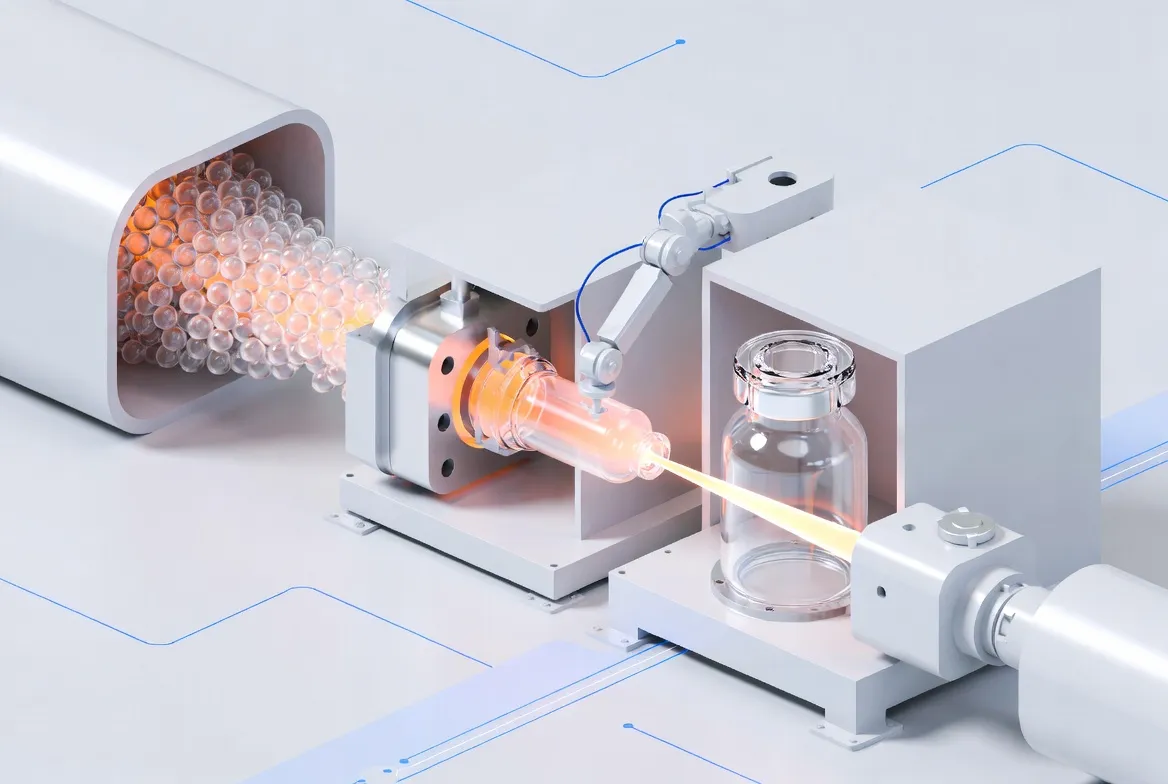
The primary advantage of One-Step ISBM in a pharmaceutical context is its “melt-to-bottle” closed-loop system. In this process, raw plastic resin is melted at high temperatures (often exceeding 250°C, which inherently acts as a thermal sterilization step) and injected into a preform mold. Within seconds, and without ever leaving the enclosed, sterile environment of the machine, that hot preform is mechanically stretched and blown into its final shape.
This completely eradicates the vulnerabilities of the Two-Step (SBM) process. There is no intermediate cooling phase where preforms are dumped into cardboard octabins. There is no warehouse storage where static electricity attracts microscopic dust. There is no mechanical unscrambler that causes preforms to grind against each other, generating plastic micro-dust that ultimately ends up inside the medication bottle. In One-Step ISBM, the product goes from sterile resin to sealed bottle untouched by human hands or ambient warehouse air.
Cleanroom Design and All-Electric Servo Technology
Pharmaceutical packaging must typically occur within ISO Class 7 or ISO Class 8 cleanrooms. Traditional hydraulic blow molding machines are fundamentally incompatible with these environments. Hydraulic systems rely on hundreds of liters of pressurized oil, prone to micro-leaks and aerosolized oil mist, which severely contaminates the HEPA-filtered air of a cleanroom.
Modern medical-grade ISBM machines utilize All-Electric Servo technology. By replacing hydraulic fluids with precision electric motors and enclosed ball screws, these machines generate zero oil mist and operate with drastically reduced particulate emissions. Furthermore, the stainless-steel enclosures and wash-down compatible surfaces of advanced ISBM platforms are engineered specifically to comply with stringent pharmaceutical cleaning and sanitization protocols.
3. Mastering Medical-Grade Polymers: Beyond PET
While PET is ubiquitous in the beverage industry, pharmaceutical packaging often demands specialty polymers capable of withstanding extreme temperatures, providing specific chemical resistances, or surviving rigorous sterilization processes. One-Step ISBM technology excels in precisely managing the complex thermal profiles required to mold these advanced resins.
Polypropylene (PP): The Champion of Moisture Barriers
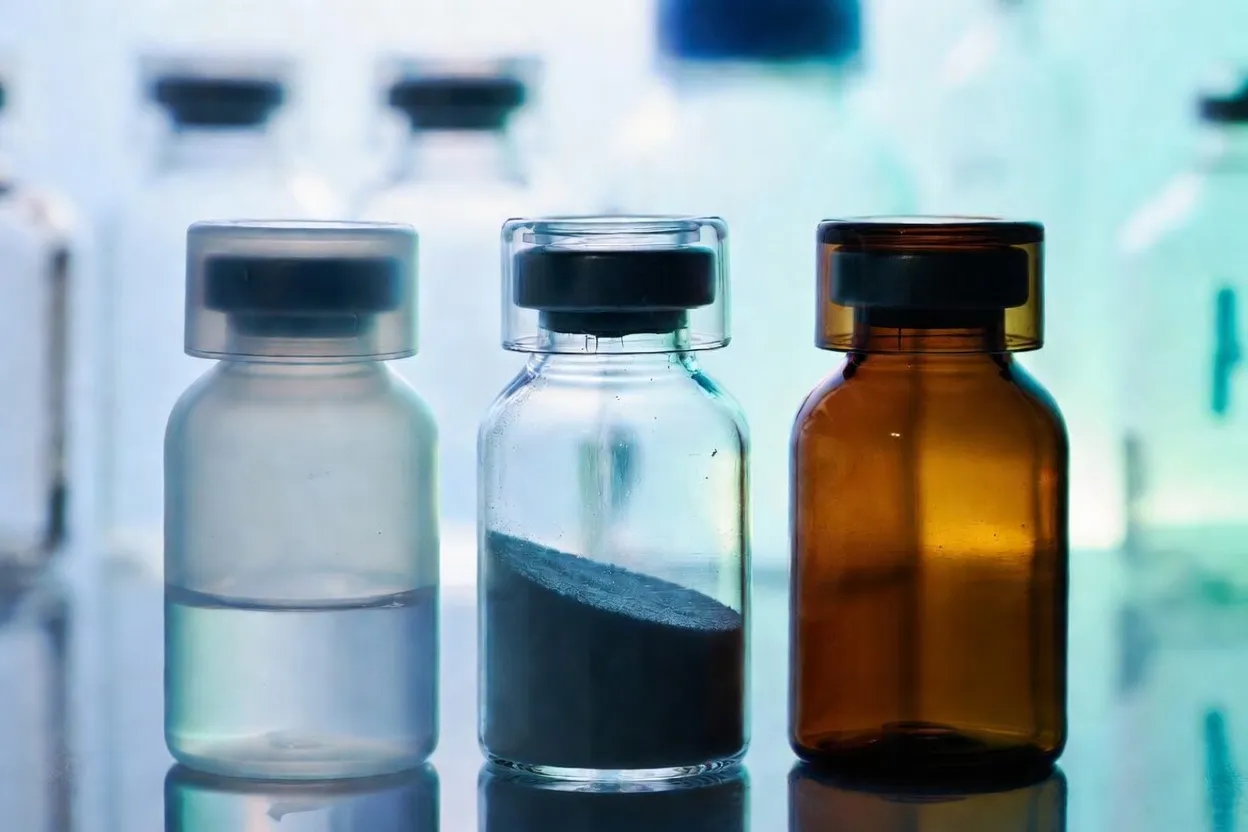
Polypropylene is a staple in medical packaging, frequently used for Intravenous (IV) infusion bottles, oral liquid suspensions, and ophthalmic drops. PP boasts an exceptionally high Moisture Vapor Transmission Rate (MVTR) barrier, preventing liquid medications from evaporating over their shelf life.
The ISBM Advantage: PP is notoriously difficult to process in a Two-Step machine because it absorbs infrared heat poorly and has a very narrow thermoplastic window. If a cold PP preform is reheated unevenly, it will blow out or tear. One-Step ISBM bypasses this entirely by utilizing the residual heat from the injection phase, ensuring the PP preform is at the exact, uniform temperature required for perfect biaxial orientation and glass-like clarity.
Polycarbonate (PC): Unyielding Impact Resistance
Polycarbonate offers glass-like transparency paired with virtually unbreakable impact strength. It is frequently utilized for lyophilization (freeze-drying) drug containers, where the vial must withstand extreme sub-zero temperatures without becoming brittle, as well as for high-end diagnostic reagent bottles.
The ISBM Advantage: PC requires extremely high injection temperatures and massive clamping force. High-end ISBM machines provide the rigid mechanical structure necessary to inject PC without inducing residual stress, ensuring the final medical vial does not crack under the pressure of vacuum-sealing or freeze-drying processes.
Polyphenylsulfone (PPSU): The Autoclavable Elite
PPSU represents the pinnacle of medical-grade plastics. Capable of withstanding continuous heat exposure exceeding 200°C, PPSU is the material of choice for surgical suction canisters, premium infant nursing bottles, and reusable medical devices that must undergo repeated high-pressure steam sterilization (autoclaving) without degrading or losing transparency.
The ISBM Advantage: Many competitors overlook PPSU because it requires highly specialized equipment. Processing PPSU demands specialized barrel metallurgy to prevent corrosive wear and hyper-accurate thermal management. An advanced ISBM machine equipped with high-temperature hot runners and specialized cooling circuits is the only reliable way to stretch-blow PPSU, maintaining its structural integrity and ensuring it remains completely free of bisphenol A (BPA) and other leachables.
4. The Criticality of Neck Finish Precision
In pharmaceutical packaging, the bottle is only as secure as its closure. A microscopic deviation in the threads of a bottle neck can lead to oxidation, moisture ingress, or the leakage of highly potent active pharmaceutical ingredients (APIs). This is an area where ISBM completely outclasses Extrusion Blow Molding (EBM).
Injection-Grade Threading vs. Extrusion Blow Pins
In EBM, the neck is formed by a blow pin forcing plastic outward against a mold. This often results in a rough internal diameter, uneven sealing surfaces, and the need for secondary trimming (deflashing) which creates dangerous plastic particulates.
Conversely, the first step of ISBM is injection molding the neck finish. The molten plastic is injected under immense pressure into a highly precise steel cavity. This creates a neck with micrometer-level dimensional accuracy. The internal diameter is perfectly smooth (essential for induction foil sealing or dropper plug insertion), and the sealing surface is absolutely flat. Because the neck is never reheated or distorted during the subsequent blowing phase, its geometry remains flawless.
Child-Resistant Closures (CRC) and Torque Retention
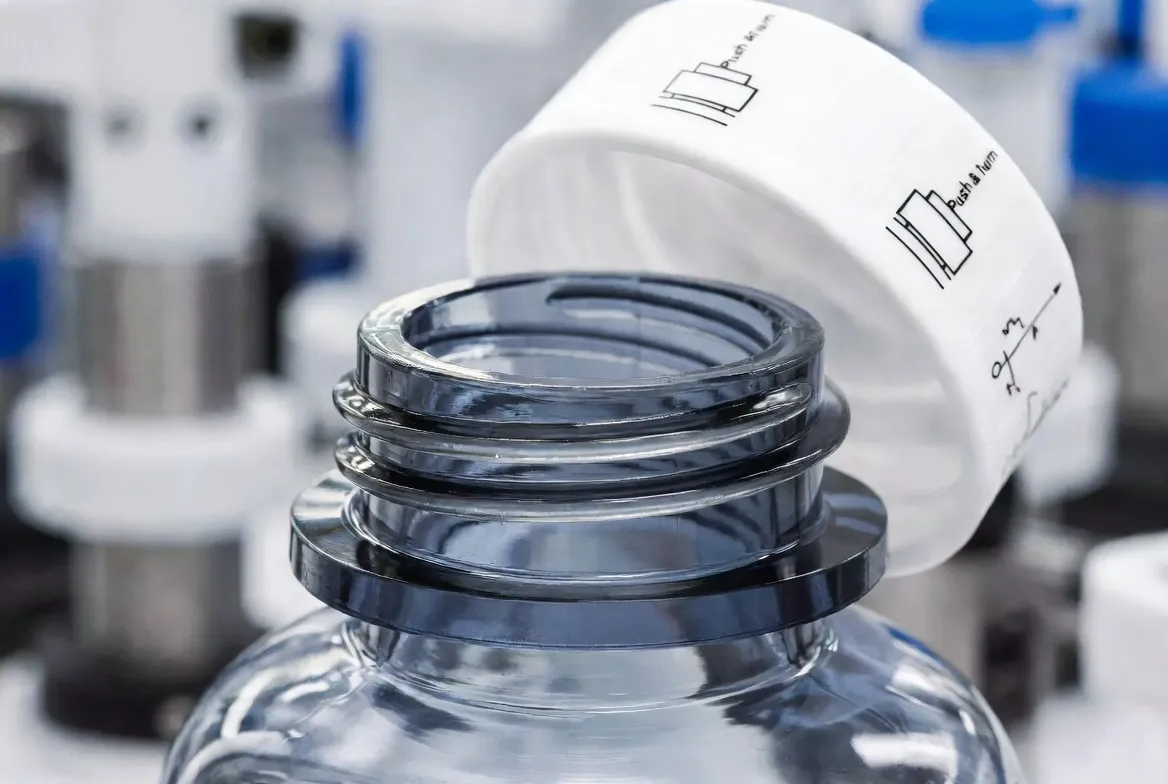
Regulatory mandates often require prescription medications to utilize Child-Resistant Closures (CRC). These sophisticated caps rely on specific push-and-turn mechanics that exert constant stress on the bottle’s threads. If the threads are weak or improperly dimensioned, the plastic will suffer from “creep” (deformation over time), causing the CRC mechanism to fail, rendering the package unsafe.
The injection-molded precision of ISBM ensures that the thread profile strictly adheres to the engineering tolerances required for CRC caps. Furthermore, the biaxial orientation achieved during the stretch-blow phase aligns the polymer chains immediately below the neck ring, providing the immense hoop strength required to maintain torque retention over a multi-year shelf life.
5. Expert Perspectives: Equipment Validation (IQ/OQ/PQ) and Traceability
When pharmaceutical companies procure machinery, they are not simply buying a tool to make bottles; they are purchasing a heavily regulated process. A perspective frequently missing from generic machinery comparisons is the rigorous validation framework required to bring a machine online in a GMP facility.
The IQ/OQ/PQ Protocol
High-end ISBM providers must offer comprehensive documentation and engineering support to pass the three-stage validation process:
- Installation Qualification (IQ): Verifying that the ISBM machine, its chillers, and resin dryers are installed exactly according to the manufacturer’s hygienic specifications, including the use of FDA-approved lubricants and cleanroom-certified wiring.
- Operational Qualification (OQ): Testing the machine’s operational limits. For an ISBM machine running medical PC, this involves proving that alarms trigger and the machine halts if injection pressures or heater band temperatures deviate from the validated parameters.
- Performance Qualification (PQ): Demonstrating that the machine consistently produces bottles meeting all physical and dimensional specifications (e.g., wall thickness, drop-test survival, drop volume accuracy) over extended, real-world production runs.
Data Traceability and FDA 21 CFR Part 11
Modern pharmaceutical audits require unbroken data trails. Advanced ISBM machines feature sophisticated PLC (Programmable Logic Controller) systems designed to comply with FDA 21 CFR Part 11. These systems record the specific thermal, pressure, and timing data for every single cycle. If a defect is found in a batch of medication years later, the manufacturer can query the ISBM machine’s secure, tamper-proof logs to prove that the packaging was molded within the precise validated parameters, effectively shielding the company from liability.
6. Economics: High Investment Returns in High-Margin Markets
Medical-grade resins like PPSU and pharmaceutical PC are exponentially more expensive than commodity packaging plastics. In these high-margin, high-risk production environments, minimizing waste is the most direct path to a rapid Return on Investment (ROI).
Because One-Step ISBM does not produce flash (scrap plastic that must be trimmed away, common in EBM), it achieves a near 100% material utilization rate. Furthermore, the elimination of downstream deflashing equipment reduces the required factory floor space, cuts secondary labor costs, and removes machinery that is difficult to sterilize. By combining ultra-low scrap rates with premium, high-value output, the Total Cost of Ownership (TCO) of a state-of-the-art ISBM machine is quickly amortized, transforming a capital expense into a highly profitable asset.
Secure Your Pharmaceutical Supply Chain
Producing pharmaceutical packaging requires uncompromising precision, strict GMP compliance, and the ability to master advanced polymers like PP, PC, and PPSU. At ISBM Solution, we engineer machinery that doesn’t just make bottles—it guarantees patient safety and protects your brand.