Redefining Blow Molding Flexibility: How One-Step ISBM Empowers Startups and Premium Niche Brands
1. Introduction: The Era of “Agile Packaging” and Niche Markets
In the global packaging market of 2026, the traditional mantra of “economies of scale” is being challenged by a new reality: The Economy of Agility. Today’s consumers are increasingly drawn to personalized products, seasonal limited editions, and high-performance niche brands. From artisan skincare and craft beverages to specialized laboratory reagents, the demand for unique bottle designs is skyrocketing.
However, for many brand managers and startup entrepreneurs, the road to a custom bottle is paved with obstacles. Traditional manufacturing methods like Two-Step Stretch Blow Molding (SBM) or Extrusion Blow Molding (EBM) are often built for high-volume commodity production. When a brand requires a custom run of 5,000 to 50,000 units, they are frequently met with prohibitive Minimum Order Quantities (MOQs), astronomical tooling costs, and lead times that stretch into months. This “production wall” stifles innovation. The solution lies in One-Step Injection Stretch Blow Molding (ISBM), a technology that bridges the gap between high-end quality and small-batch flexibility.
2. Why “One-Step” is the Gold Standard for Small Batches
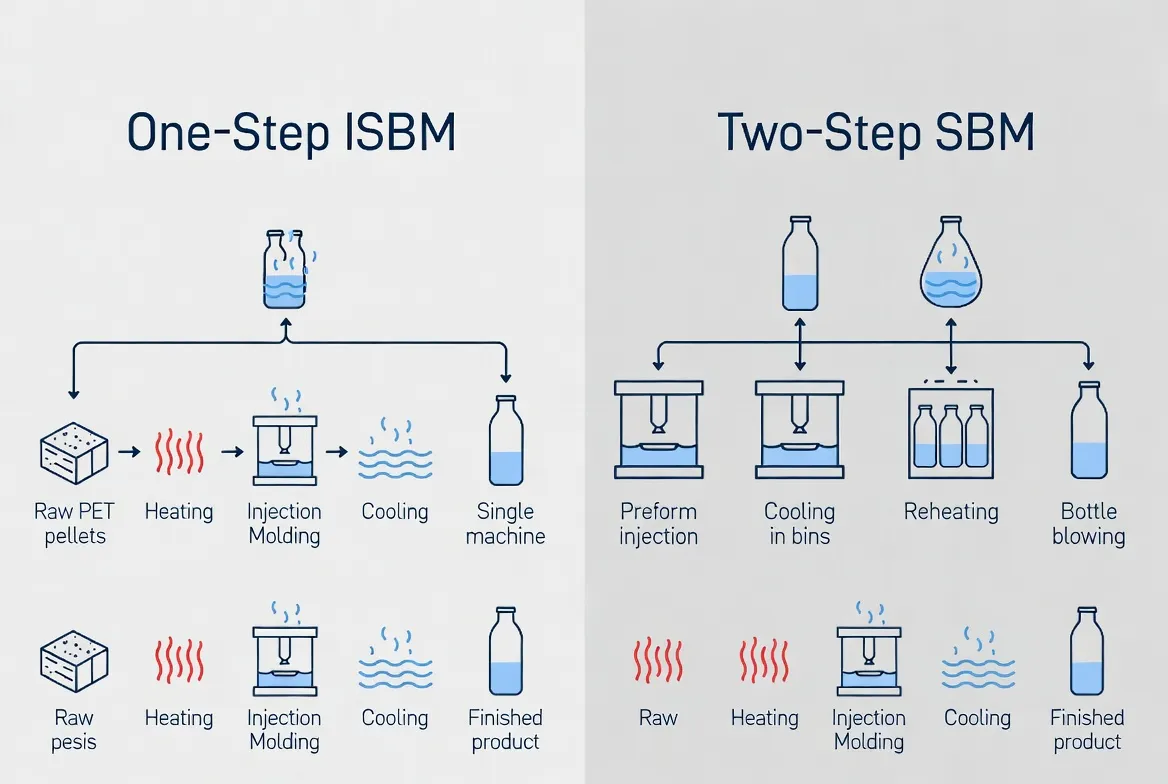
To understand why ISBM is the answer for small-batch custom production, we must look at the fundamental difference between “One-Step” and “Two-Step” processes. In a Two-Step system, you must first purchase or manufacture preforms (the “test tube” shaped plastic) on one machine, store them, and then move them to a second machine to be blown into bottles. For custom shapes, this means you need a custom preform mold AND a custom blow mold—doubling your initial capital expenditure (CapEx).
The Vertical Integration Advantage
One-Step ISBM integrates the injection of the preform and the blowing of the bottle into a single, continuous machine cycle. For small-batch producers, this eliminates the “Preform Dependence.” You are no longer forced to buy 100,000 generic preforms from a third party just to get a decent price. You start with raw PET resin pellets and end with a finished, custom bottle.
Reduced Tooling Costs
Because the preform and the bottle are designed as a single unit within one machine, the engineering is more cohesive. For smaller runs, ISBM molds can be designed with fewer cavities. While a mass-production line might run 48 cavities, a small-batch машина ISBM can run 4 or 6 cavities. This drastically lowers the cost of the mold set, making it financially viable to produce a unique bottle for a limited-edition product launch.
3. Flexible Tooling: The Technical Secret to Multi-SKU Management
For brands managing a Multi-SKU portfolio—for example, a skincare line with five different scents but the same bottle footprint—the ability to change designs quickly is paramount. This is where ISBMSolution excels with modular tooling concepts.
Mold Insert Technology
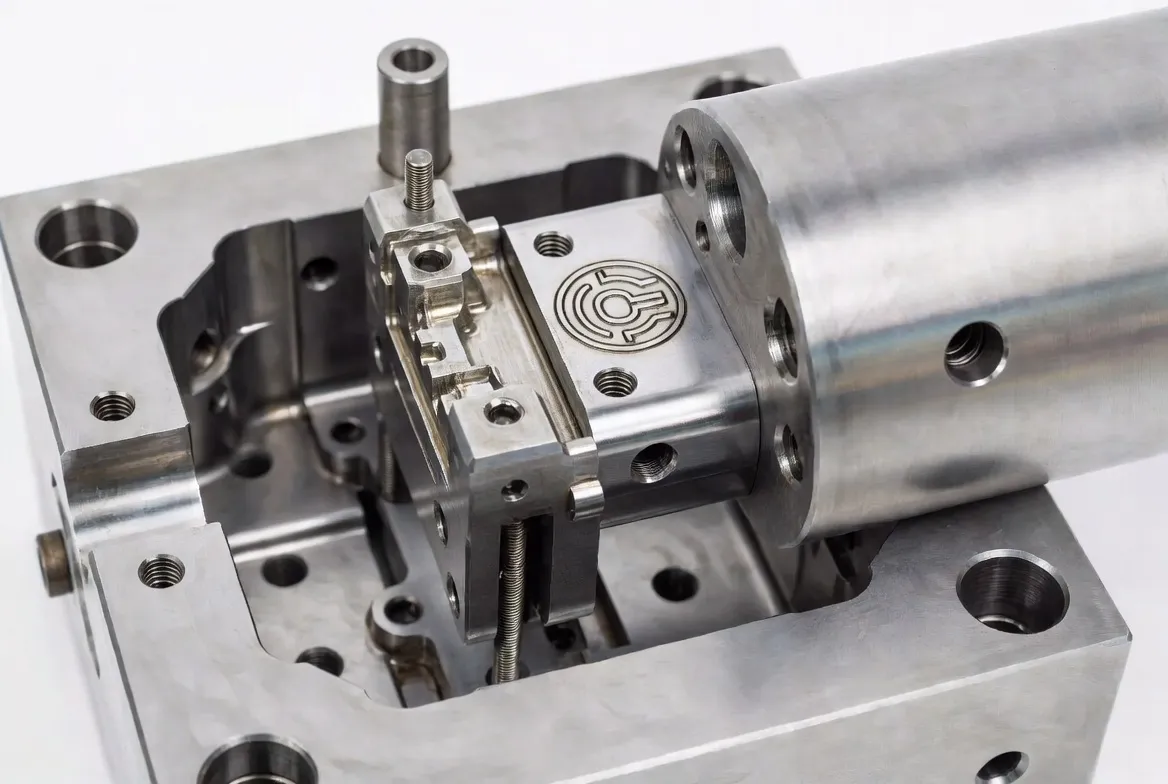
One of the most cost-effective ways to achieve customization in small batches is through Mold Inserts. Instead of replacing an entire 500kg steel mold, operators can swap out specific “insert” plates. These inserts can contain different brand logos, decorative textures, or even slight variations in bottle geometry. This allows a manufacturer to produce “Variety Packs” or “Private Label” products with minimal downtime and almost zero additional tooling cost once the master mold is built.
Quick Changeover Systems (QCO)
In traditional factories, a mold change can take an entire shift (8-10 hours). For a small batch of 10,000 bottles, a 10-hour setup time is an economic disaster. Modern ISBM machines are equipped with Quick Changeover (QCO) features, including:
- Simplified Hydraulic Connections: Manifold-based systems that allow for “plug-and-play” mold installation.
- Digital Parameter Recall: Once a custom SKU has been run, the machine “remembers” the exact temperature, pressure, and timing settings. The next time that SKU is ordered, the setup time is reduced to the physical swap of the steel.
4. Premium Quality: Glass-Like Clarity for High-End Niche Brands
Small-batch production is often synonymous with Premiumization. Whether it’s a $100 bottle of serum or a boutique fragrance, the container must look and feel expensive. One-Step ISBM delivers a level of aesthetic perfection that Two-Step processes simply cannot match.
The “Zero-Scuff” Environment
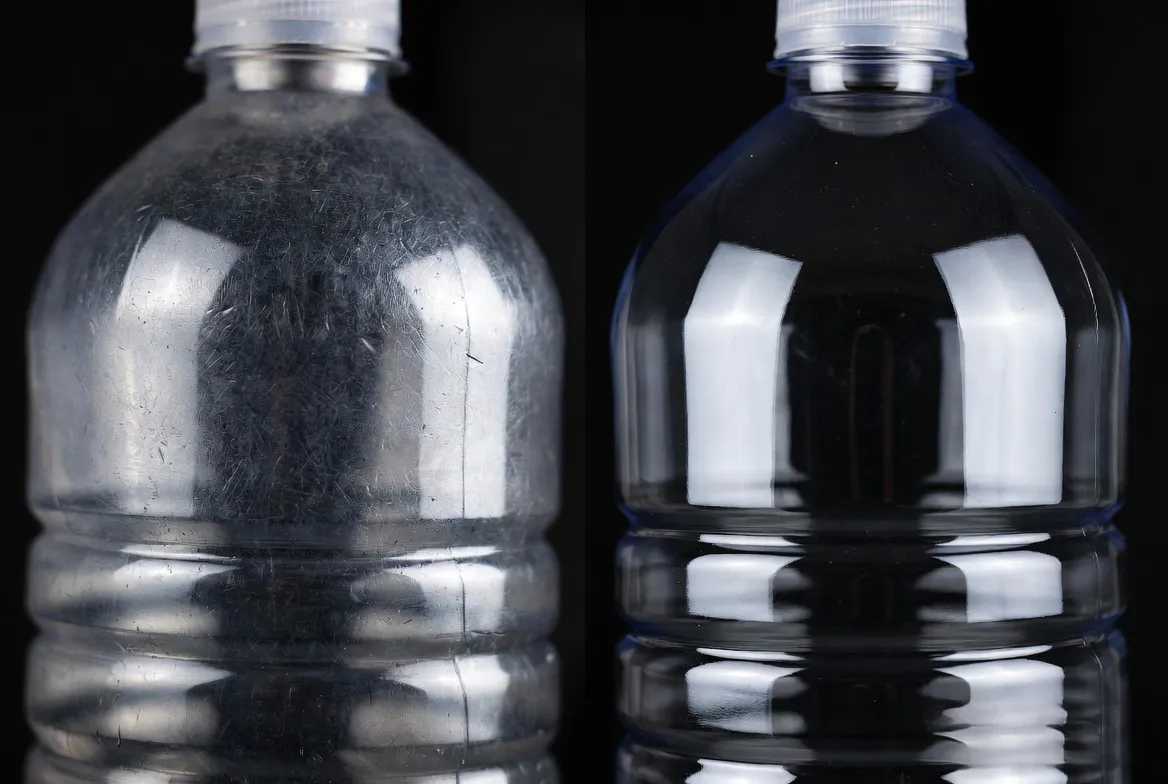
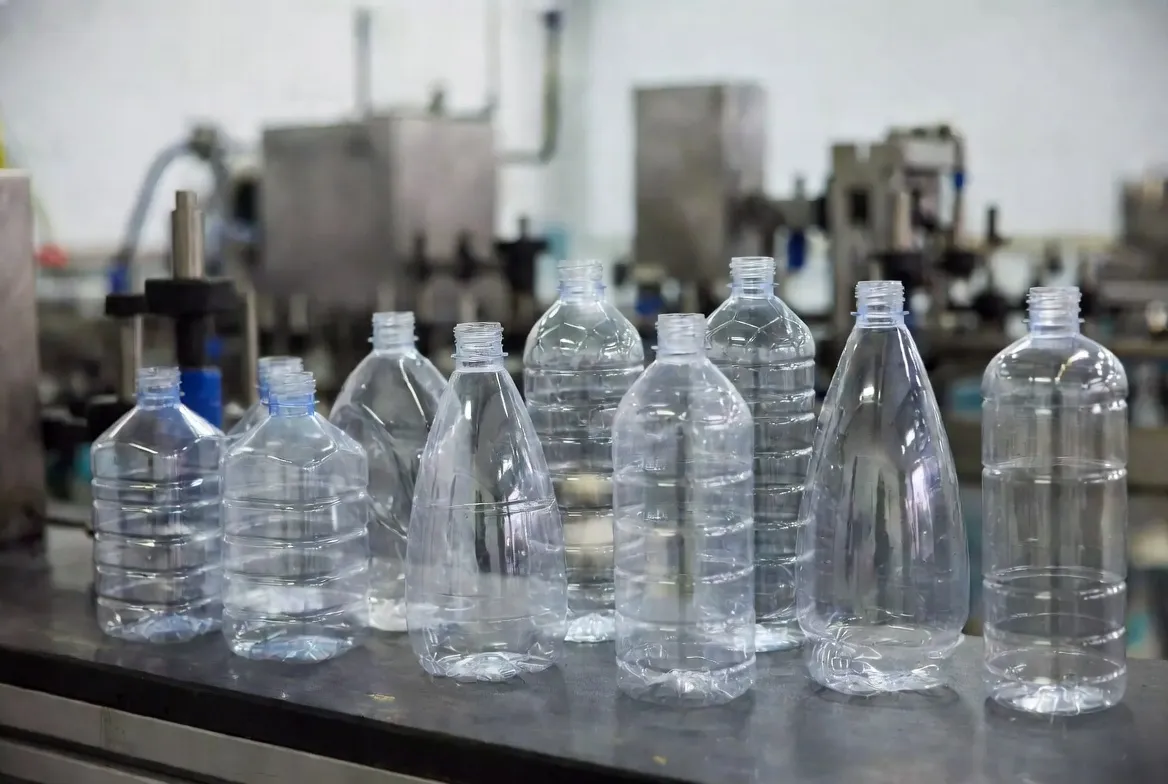
In Two-Step production, preforms are tumbled into bins, shipped in boxes, and fed into hoppers. This causes thousands of microscopic scratches (scuffs) on the preform surface. When the bottle is blown, these scuffs expand, resulting in a slightly “cloudy” or “misty” appearance. In One-Step ISBM, the preform never touches another surface. It is transferred by a robotic arm directly from the injection cavity to the blow mold. The result is a “diamond-clear,” high-gloss finish that mimics the luxury of glass while retaining the lightweight benefits of PET.
Precision Neck Finishes
Custom packaging often involves complex closures—droppers, fine-mist sprayers, or heavy-weighted caps. These require absolute precision in the neck thread dimensions. Because the neck of an ISBM bottle is injection-molded (not blown or trimmed), it holds tolerances within ±0.05mm. This ensures that even in small, custom runs, the failure rate for “leaking caps” is virtually zero.
5. Economic Reality: Calculating the ROI of Small-Batch ISBM
When evaluating the cost of small-batch production, you must look at the Total Cost of Ownership (TCO), not just the unit price. ISBM offers a superior ROI for custom projects through several key factors:
Zero Inventory Risk
Why store 100,000 “standard” bottles in a warehouse (Dead Stock) when you can produce 10,000 custom bottles only when the order arrives? ISBM supports Just-In-Time (JIT) manufacturing.
Lower Tooling Amortization
Spreading the cost of a 4-cavity ISBM mold over a 20,000-unit run is significantly more affordable than amortizing a high-volume 48-cavity SBM mold set.
Reduced Shipping & Logistics
By producing bottles in-house or through a localized agile partner, brands eliminate the cost and carbon footprint of shipping empty “air” (bottles) across continents.
6. 2026 Sustainability: Green Small-Batch Customization
The flexibility of ISBM is a major driver for environmental sustainability. As brands move toward 100% rPET (recycled PET) or bio-based resins, they often need to perform “test runs” to see how the material behaves in a specific bottle shape. ISBM is the perfect platform for these experiments.
Low-Waste Changeovers: Our machines are designed to reach “Steady State” production faster than traditional lines. This means fewer “scrap” bottles are produced during the startup phase of a new custom run, directly reducing material waste. Furthermore, the energy-saving nature of the One-Step process—which uses the latent heat of the preform instead of reheating it—makes it the greenest choice for high-frequency production switches.
Defining the Future of Agile Packaging
The days of being “too small to customize” are over. One-Step ISBM technology has democratized high-end packaging, allowing startups to compete with global giants on visual appeal and quality. By embracing flexible manufacturing, quick changeover tooling, and zero-scuff quality, brand owners can finally unleash their creative vision without the burden of mass-market constraints.