选择一个 注塑拉伸吹塑机 这是一项影响未来十年甚至更长时间生产经济效益的资本决策。然而,包括大多数制造商网站在内的在线指南,将选择过程简化为四个表面标准:产量、瓶子尺寸、材料类型和“良好的售后服务”。这些资源均未提供采购工程师真正需要的量化框架。在评估任何特定机器型号之前,请首先确认您自身的需求已在以下七个因素中得到精确定义。有关ISBM生产流程本身的背景信息,请参阅我们的[此处插入链接]。 ISBM机器工作原理指南 以及 单阶段与两阶段的比较.
因子 01
在评估任何机器之前,请先计算所需的腔体数量。
所有同类指南都说“根据产量选择腔体数量”,但没有一个指南提供计算公式。这一个疏漏导致了ISBM采购中最常见的错误:凭直觉而非计算选择腔体数量,然后在调试后发现产能缺口高达20-30%。在您打开任何产品目录之前,请先从这里入手。
龋齿计数公式——精选参考资料
所需腔数 = 目标 BPH ÷ (3,600 ÷ 循环时间(秒))
例子: 目标产量 = 3,600 瓶/小时 / 循环时间 = 20 秒(500 毫升水瓶)
单腔输出 = 3,600 ÷ 20 = 180 瓶/小时
所需毛坯牙腔数 = 3,600 ÷ 180 = 20个龋洞
+ 20% 效率裕度 → 指定 24个龋洞
| 生产环境 |
效率边际 |
腔体倍增器 |
| 单一SKU,持续稳定生产 |
15% |
原始计数 × 1.15 |
| 多SKU,频繁换货 |
20–25% |
原始计数 × 1.20–1.25 |
| 制药/精准应用 |
20% + 质检窗口 |
向上取整至下一个标准规格 |
| rPET共混物生产(>25%含量) |
25% |
原始计数 × 1.25 |
| 瓶装类别 |
体积 |
典型周期时间 |
| 标准水/饮料 |
250–500毫升 |
15–18秒 |
| 标准水/饮料 |
1–2升 |
18–22秒 |
| 美容/特殊不对称 |
50–200毫升 |
18–24秒 |
| 广口瓶/容器 |
250毫升–1升 |
22–28秒 |
| 食用油/手柄瓶 |
1–5升 |
25–35秒 |
⚠️
关键要点:切勿将峰值产量作为规划基准。
机器规格表上列出的是理想情况下单SKU、零换型条件下的最大理论产量。您的生产计划基准应为额定产量,通常为所述最大产量的75-85%。使用峰值产量进行腔体计算是导致调试后产能不足的最常见原因。
因子02
材料兼容性——不仅仅是“PET”这么简单
大多数指南将PET/PP/PC列为ISBM的常用材料。但它们忽略了一个关键点:不同的材料需要截然不同的机器配置。一台针对PET优化的机器可能需要进行大量的硬件改造,甚至完全不适用于PP或PC的生产。在选择机器之前制定完整的材料方案可以避免交付后昂贵的改造费用。有关PET在加工过程中材料特性的完整科学原理,请参阅我们的 PET瓶生产工艺指南.

| 材料 |
熔点 |
特殊配置 |
主要应用 |
| 宠物 |
270–285°C |
强制使用干燥剂干燥器(露点≤−40°C)。 |
饮料、水、食物 |
| PP |
200–230°C |
不同的螺杆长径比;更低的筒体区域温度 |
医疗、化妆品、热灌装 |
| 个人电脑 |
260–300°C |
高温模具控制器(≥80°C);预干燥必不可少 |
医疗用饮水机 |
| PETG/PCTG |
230–260°C |
PET 样配置;确认静脉输液范围兼容性 |
化妆品、礼品包装 |
| 特里坦 |
240–270°C |
需要进行不含双酚A的合规性验证 |
婴儿用品、运动 |
| rPET ♻️ |
265–280°C |
伺服温度控制(±0.5°C);静脉补偿 |
可持续包装 |
♻️
rPET兼容性:2025年采购不可协商事项
越来越多的品牌所有者客户将25-50% rPET含量要求直接写入包装供应商规格说明中。如今购买未经验证的rPET加工能力的设备,可能在两到三年内面临代价高昂的改造费用。rPET的特性粘度较低(比原生PET低0.04-0.08 dL/g),因此需要比标准PET更严格的调质温度控制和更宽的工艺参数范围。
直接询问您的供应商:
“您的机器是否支持高达 50% 的 rPET 混合物?需要进行哪些参数调整?您的调节站可以处理的最小/最大 IV 范围是多少?”
因子03
液压式、伺服液压式和全电动式:驱动系统选择
驱动系统选择是影响长期运营成本的最重要配置决策,然而,竞争对手的指南却往往对此着墨最少,通常只用一句话概括“可选伺服驱动”。液压驱动、伺服液压驱动和全电动驱动之间的选择,会对能耗、精度、噪音、维护成本和应用适用性产生影响,这些影响会在机器十年的使用寿命内累积累积。精度在……中的作用 双轴取向质量请参阅我们的专门指南。
| 方面 |
传统液压 |
伺服液压(混合式) |
全电动(伺服) |
| 能源消耗 |
基线 — 100% |
60–70% 基线 |
50–60% 基线 |
| 初始购买成本 |
最低 |
中等的 |
最高 |
| 定位重复性 |
±0.5 毫米 |
±0.1 毫米 |
±0.05 毫米 |
| 工作噪声水平 |
75–85 分贝 |
65–75 分贝 |
55–65 分贝 |
| 维护要求 |
液压油、密封件、泵——频繁 |
液压油 + 电机保养 |
极简设计——无液压系统 |
| 温度/环境 |
范围广,性能强劲 |
范围广,性能强劲 |
需要防尘/防潮保护 |
| 高速运动 |
有限——压力滞后 |
反响良好 |
一流 |
传统液压
最佳应用场景:资本预算受限、生产采用单班或双班制、工厂已具备液压维护专业知识,且应用为非精密应用(标准圆形瓶)。
不建议用于制药/GMP环境
伺服液压 ✅ 主流
最佳应用场景:兼顾资本成本和运营效率;中高产量;适用于大多数PET饮料、化妆品和食品应用。也是新装置中最常用的配置。
大多数买家的推荐默认选项
全电动伺服电机
最佳应用场景:GMP洁净室要求(零液压油污染风险);24小时高强度生产;小型高精度瓶(50-250毫升);最高长期TCO效率目标。
药品GMP附件1的要求
💡
从十年总拥有成本角度看驱动系统选择
在年产量500万瓶、工业用电价格为0.8日元/千瓦时的情况下,全电动机器相比传统液压机器每年可节省约4万至6万日元。在机器10年的使用寿命内,累计节省的40万至60万日元通常足以抵消甚至超过全电动配置的初始购置价格溢价。
因子 04
确定合适的自动化级别——从半自动到工业4.0
一些指南将“全自动”视为一个非此即彼的二元终点,仿佛所有全自动机器都是一样的。实际上,ISBM 自动化分为五个不同的级别,每个级别所需的资本投入、劳动力分配和集成基础设施都各不相同。购买高于您运营能力的自动化级别,既浪费资金,又增加维护复杂性,却无法带来任何价值。确定目标级别的最简单方法如下: 您愿意为每台机器每个班次配备多少名专职操作员? 这一个问题就能决定你的自动化级别。
| 等级 |
姓名 |
定义 |
操作员/机器 |
最适合 |
| L1 |
半自动 |
手动上样;自动吹气和弹出 |
2-3 |
研发、小批量、原型、特殊不对称罐 |
| L2 |
基本全自动 |
自动瓶坯上料+自动出瓶输送机 |
1-2 |
中等批量标准瓶生产,食品饮料 |
| L3 |
全自动+在线质量控制 |
L2+集成视觉检测系统;自动剔除 |
1 |
食品、个人护理、受管制饮料应用 |
| L4 |
全自动 + MES |
L3 + OEE/生产数据上传至ERP/MES系统 |
每 2 台机器 1 台 |
大型制造商,通过 ISO 认证的工厂 |
| L5 |
工业4.0 |
L4 + 预测性维护 + 远程参数控制 |
每4台以上机器配备1台 |
符合药品GMP标准的高端化妆品,高端精密制造 |
各自动化级别所需的设备
L2+
自动预成型件装载机/料斗、出料输送机、颈部表面定向传感器
L3+
在线摄像头检测系统(外观+尺寸)、自动剔除门、样品质检站
L4+
OPC-UA/MQTT 数据接口、OEE 模块、ERP/MES API 连接器、生产报告仪表板
L5+
预测性维护传感器(振动、温度、油质)、远程 VPN 访问、AI 参数优化模块
因子05
热流道系统及模具兼容性——隐藏的长期成本驱动因素
在ISBM采购中,热流道和模具系统的选择或许是最容易被忽视的环节。机器购置价格是一次性成本;而模具投资则是持续性成本,会随着每次新产品推出、每次SKU变更以及每次产品配方调整而增加。对于产品组合丰富的企业而言,10年内的模具总成本通常会超过机器的初始成本。有关影响模具设计决策的预成型件几何形状的详细指导,请参阅我们的 ISBM 预成型体设计指南.
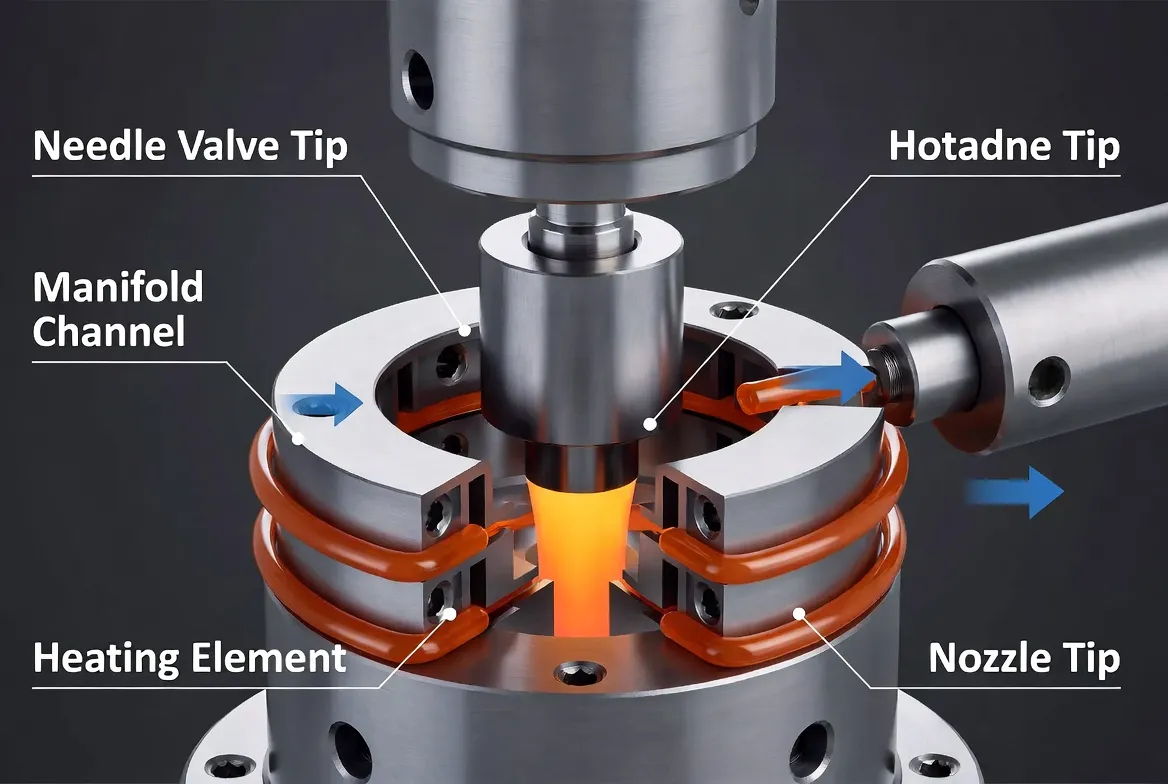
| 门类型 |
主要特征 |
腔体范围 |
风险/备注 |
| 直接通道 |
结构最简单,成本最低。 |
1-2个空腔 |
可见的浇铸痕迹——不适用于高档透明瓶 |
| 阀门闸门 ✅ |
最小的浇口痕迹;最高的精度;最干净的灌装顺序 |
2-16个腔 |
成本和维护要求较高;强烈推荐用于化妆品和制药行业。 |
| 打开大门 |
成本低于闸阀;适用于不透明应用 |
2-8个腔 |
有拉丝风险;不适用于外观高端的透明瓶。 |
向每位供应商询问的 3 个模具兼容性问题
Q1
这台机器是否接受其他制造商的模具(SIPA、Netstal、ASB 标准尺寸)?
专有模具锁定会显著增加您的长期模具成本,并消除竞争性模具采购机会。务必坚持采用开放标准的模具接口。
Q2
改变产品规格时,是否需要更换整个热流道,还是只需要更换冷腔的一半?
共享热流道+多个冷模可显著降低单个SKU的模具成本。这是一项重要的成本优势,需要明确确认。
第三季度
标准模具钢材等级是多少?经认证的模具寿命(以印模次数计)是多少?
P20/718钢:2亿至3亿次压痕。H13/S136硬化钢:5亿至10亿次压痕。要求提供书面保证,而非口头估价。
在所有主要竞争对手的相关指南中,认证和合规要求都完全缺失。对于大多数化妆品、食品或饮料行业的买家来说,这仅仅是不方便而已。但对于药品、婴幼儿产品或出口欧盟/美国的买家而言,这却是阻碍采购的硬性要求,必须在其他任何因素之前解决。如果在机器交付后才发现不合规问题,您将面临代价高昂的改造、停产或包装被监管机构拒收——这些都难以承受。
| 行业/市场 |
所需认证/标准 |
主管机关/法规 |
| 欧盟食品接触包装 |
CE 标志 + 符合欧盟法规 10/2011 的材料要求 |
欧盟委员会 |
| 美国食品/饮料包装 |
FDA 21 CFR 177.1630(PET 食品接触) |
美国食品药品监督管理局 |
| 药品(GMP) |
CE 标志 + 符合欧盟 GMP 附录 1 的机器材料 |
EMA/欧盟GMP |
| 婴幼儿产品 |
不含双酚A声明 + Tritan / PPSU 材料认证 |
区域消费者安全机构 |
| 出口到欧盟 |
CE标志——机械指令2006/42/EC(机械安全) |
欧盟公告机构 |
| 出口到日本 |
JIS B 6021 等效符合性文件 |
联合信息系统公司 |
⚠️ 如何验证CE证书的真伪——3个步骤
01
请求提供符合性声明(DoC)原件, 并非宣传册上的参考信息或机器上的标签。合规文件必须注明具体的公告机构名称和四位数的识别号码。
02
核实公告机构编号 在欧盟委员会的NANDO数据库(ec.europa.eu/growth/tools-databases/nando)中,由不存在或已从列表中移除的机构颁发的CE证书对欧盟进口不具有法律效力。
03
确认型号 DoC(符合性声明)上的信息必须与您购买的机器型号完全一致,包括任何配置后缀。例如,HGY150 型号的 CE 认证并不自动涵盖 HGY150-V4-EV 型号。
因子 07 ⭐
售后支持——机器采购中最被低估的因素
几乎所有同类指南的结尾都大同小异:“选择一家信誉良好、客户支持到位的制造商。” 但这并不能提供任何实际操作指导。以下这份包含7个项目的审核清单,可以将售后评估从主观印象转化为可验证、有据可查的供应商评估。请在供应商评估过程中,而非合同签订之后,将其作为结构化的问卷使用。
①
响应时间 SLA(服务级别协议)
问: “当我的机器发生严重停机故障时,你们承诺的书面响应时间是多久?”
✅ 标准:远程≤4小时/现场≤48小时(亚洲)/≤72小时(欧洲)
⛔ 危险信号:没有书面服务水平协议 (SLA);只有口头上的“尽快”承诺
②
备件库存与物流
问: “哪里有最近的关键易损件库存?热流道阀针或伺服电机模块的交货周期是多久?”
✅ 标准:区域库存;关键部件≤5个工作日
⛔ 危险信号:“所有零件均从中国工厂订购”/交货期4周以上
③
远程诊断能力
问: “这台机器是否支持远程访问诊断?使用什么协议?我们的生产数据存储在哪里?”
✅ 标准:OPC-UA/VPN 接入;实时参数读取;故障代码库
⛔ 警告:无法远程访问;需要现场查看故障日志
④
安装和操作员培训
问: “调试培训需要多少天?是否提供我们语言的完整操作手册和视频培训资料库?”
✅ 标准配置:现场调试 5-10 天;操作员培训 3-5 天;完整手册
⛔ 危险信号:培训时间不足3天;手册为机器翻译且内容不完整
⑤
本地服务工程师服务范围
问: “贵公司在[贵国/地区]有多少名常驻服务工程师?分布在哪些城市?能否提供他们的直接联系方式?”
✅ 标准配置:指定工程师,提供所在城市及直接联系方式;提供服务合同
⛔ 危险信号:“我们拥有全球合作伙伴网络”——但未提供任何具体联系人。
⑥
详细的保修条款
问: “保修期是多久?哪些部件在保修范围内?哪些部件明确排除在外?热流道和电气系统是否在保修范围内?”
✅ 标准保修:整机保修 12-18 个月;包含热流道和电气部件;不含易损件
⛔ 危险信号:保修期不足 12 个月;免责条款过多;无书面保修文件
⑦
参考客户访问
问: “您能否提供我所在行业三位现有客户的直接联系方式,以便我可以直接询问他们的使用体验——包括他们遇到的任何问题?”
✅ 标准:主动提供;鼓励独立联系;优先考虑技术人员而非采购人员
⛔ 危险信号:拒绝提供联系方式;仅重定向至营销宣传语。
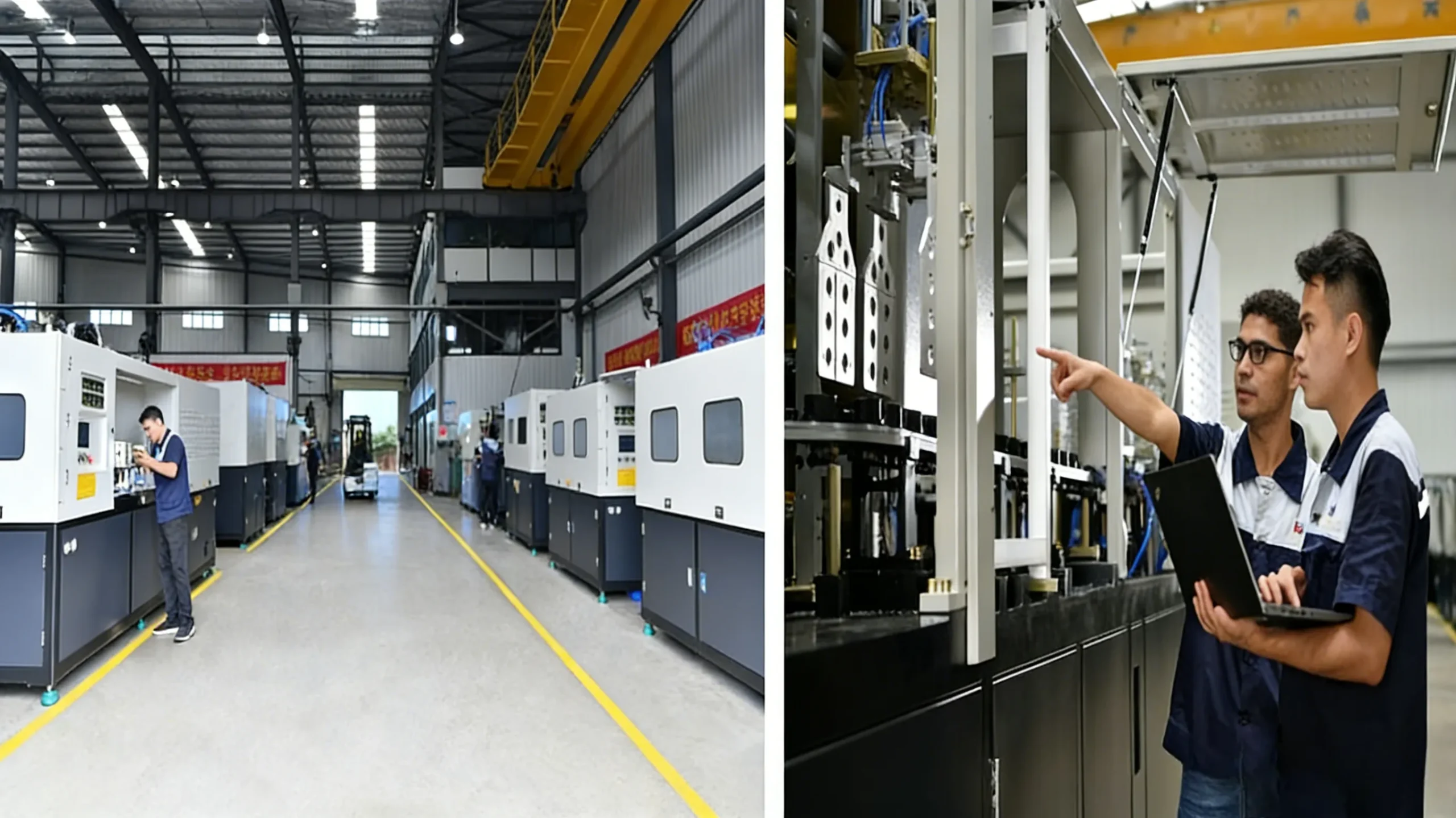
使用此评分卡,根据相同的七项标准比较多个供应商。对每个因素进行 1-10 分的评分,乘以相应的权重,然后将所有分数相加,得出最终的加权得分。以下权重反映了标准的一般应用——例如,药品采购商应将 F6(认证)的权重提高到 25%,并按比例降低 F3 和 F5 的权重。
| 评价因素 |
重量 |
供应商A
(得分/10) |
供应商B
(得分/10) |
供应商C
(得分/10) |
| F1 · 腔数/输出匹配 |
20% |
__ / 10 |
__ / 10 |
__ / 10 |
| F2 · 材料兼容性(包括 rPET) |
10% |
__ / 10 |
__ / 10 |
__ / 10 |
| F3 · 驱动系统 TCO 适配 |
15% |
__ / 10 |
__ / 10 |
__ / 10 |
| F4 · 自动化级别匹配 |
15% |
__ / 10 |
__ / 10 |
__ / 10 |
| F5 · 热流道/模具柔性 |
10% |
__ / 10 |
__ / 10 |
__ / 10 |
| F6 · 认证与合规 |
15% |
__ / 10 |
__ / 10 |
__ / 10 |
| F7 · 售后支持(7 点审核) |
15% |
__ / 10 |
__ / 10 |
__ / 10 |
| 加权总分 |
100% |
— |
— |
— |
注意:对于制药应用,请相应地将 F6 的重量增加到 25%,并将 F3 减少到 10%,将 F5 减少到 8%。
风险提示
7个常见的ISBM机器购买错误——以及如何避免它们
所有关于此主题的竞争性内容都只提供正面指导。本模块旨在解决它们普遍忽略的一个方面:那些持续给买家造成经济损失、生产停工或监管风险的具体且可避免的错误。以下每一项都源自ISBM采购决策中观察到的真实模式。如果您已完成评估的这一部分,那么您已经避免了其中的大部分错误。有关生产缺陷诊断,请参阅我们的 ISBM缺陷指南.
错误 01
比较购买价格而非10年总拥有成本
一台前期投入多出10万日元的机器,如果每年能节省30%的能源,那么只需3-4年就能收回这笔溢价,并在其剩余的6-7年使用寿命内持续节省能源。如果不进行总拥有成本(TCO)建模,单纯的购置价格比较往往会使错误的机器受益。
错误 02
利用峰值输出规划腔体数量
如果仅根据机器标称的峰值产量来指定腔体数量,而不考虑 15–25% 的效率裕度,则会导致生产中系统性地出现 20–30% 的产能缺口。公式 1 中的公式可以完全避免这种误差。
错误 03
跳过rPET兼容性验证
如果购买的机器没有明确的rPET验证,一旦品牌客户强制要求使用rPET,就需要进行代价高昂的改造——这种情况在欧洲、北美和澳大利亚市场正加速发生。如今,只需5分钟的验证,就能避免24个月内超过20万日元的改造费用。
错误 04
忽略热流道系统规格
进口部件的热流道阀针阀故障可能导致备件需要从海外供应商处等待 4-6 周才能到货。签订任何合同前,务必确认热流道部件的备件在当地是否有货。
错误 05
将“全自动”视为智能制造
全自动机器(L2)如果没有数据接口,就无法连接到工厂的MES系统,无法生成OEE报告,也无法支持预测性维护。如果您的工厂正在运行或计划运行数字化生产系统,请在购买前确认机器是否具备OPC-UA或MQTT数据输出接口。
错误 06
未经认证机构验证而接受CE证书
在机械进口领域,伪造和过期的CE证书是一个屡见不鲜的现象。只需在欧盟的NANDO数据库中花5分钟时间核实公告机构编号(参见因素6),即可彻底消除这种风险。切勿将CE标签或宣传册上的编号视为合规证明。
错误 07
服务合同中未包含服务水平协议 (SLA)。
如果没有书面服务水平协议 (SLA) 明确规定最长响应和解决时间,供应商在设备停机时没有任何合同义务优先处理您的设备。“我们正在安排上门”这种说法在法律上无效,除非合同明确规定技术人员必须在 48 小时内到达。请将 SLA 条款添加到您的采购订单中,而不仅仅是您的愿望清单。
每小时生产 3000 瓶,需要多少个机腔?
使用公式 1:对于 500 毫升水瓶,循环时间为 18 秒,单腔产量 = 3,600 ÷ 18 = 200 瓶/小时。所需模腔数量 = 3,000 ÷ 200 = 15 个模腔。对于混合 SKU 的生产,效率裕度为 20%,建议选用 18 腔注塑机。对于单一 SKU 的连续生产,效率裕度为 15% 的 16 腔注塑机即可满足需求。始终向上取整至最接近的可用标准配置,并使用您特定瓶型设计的实际循环时间与您的机器供应商确认。
伺服液压式和全电动ISBM机器有什么区别?
伺服液压机械采用伺服电机控制变速液压泵,在保持高夹紧力操作所需的液压动力的同时,将能耗降低至传统液压机械的约 60–70%。全电动机械则用伺服电机直接驱动机械执行器,取代所有液压系统,能耗仅为传统液压机械的约 50–60%,且噪音接近于零,定位重复精度为 ±0.05mm,并不存在液压油污染风险。全电动机械的初始成本较高,但维护和运行成本显著降低,是制药行业 GMP 洁净室环境的必备配置。
哪种ISBM机器配置最适合药品包装?
药品包装需要四个特定的配置要素:(1) 全电动驱动系统——消除GMP洁净室环境中液压油污染的风险;(2) 阀式热流道——确保精密瓶的浇口尽可能洁净;(3) 自动化等级L3或更高——在线视觉检测,具备自动剔除功能和全程可追溯性;(4) 经公告机构验证的CE标志,且材料符合欧盟GMP附录1的要求。与瓶坯接触的机器材料应指定为食品级/医药级不锈钢或同等材料。在评估任何供应商之前,请在采购规格书中明确确认这四项要求。
如何验证机器供应商的CE认证是否真实有效?
请索取符合性声明 (DoC) 原件,而非宣传册、证书图片或机器标签。DoC 必须包含颁发证书的公告机构的全称和 4 位数识别码。请在欧盟委员会的 NANDO 数据库 (ec.europa.eu/growth/tools-databases/nando) 中验证此识别码——任何已注册的公告机构及其当前状态都会显示在数据库中。如果未显示该机构的识别码、识别码已过期或已被从数据库中移除,则该 CE 认证对欧盟进口不具有法律效力。此外,请确认 DoC 上的型号名称与您购买的机器型号完全一致。
在ISBM机器合同中,我应该坚持哪些售后服务条款?
您的ISBM机器采购合同至少应包含以下内容:(1) 书面服务水平协议 (SLA),明确规定远程诊断响应时间≤4小时,现场工程师到达时间≤48小时(亚洲)或≤72小时(欧洲/美洲);(2) 12-18个月的整机保修期,涵盖热流道系统和电气元件,但明确排除易损件;(3) 备件供应承诺,明确关键部件的最长交货周期;(4) 书面确认调试培训时长和授课语言;(5) 明确远程访问协议(OPC-UA或VPN);以及 (6) 指定本地服务工程师,并在合同中附上其直接联系方式。任何不愿以书面形式承诺这些条款的供应商都应被视为存在重大服务风险。
准备好将此框架应用于特定机器了吗?
ISBM Solution 的工程团队会与每一位潜在买家一起完成此评估框架——在做出任何购买承诺之前,免费提供腔体数量计算、驱动系统 TCO 比较和特定应用配置建议。
立即开始免费选机咨询 →